A sheet of glass coming off a production line looks flawless. Smooth. Clear. Expensive.
But getting that sheet from the factory to a construction site hundreds or thousands of kilometers away involves loading, unloading, stacking, truck vibrations, warehouse shuffling, and container ship rolling. At any of those steps, a single corner bump can turn a perfect sheet into a pile of worthless shards.
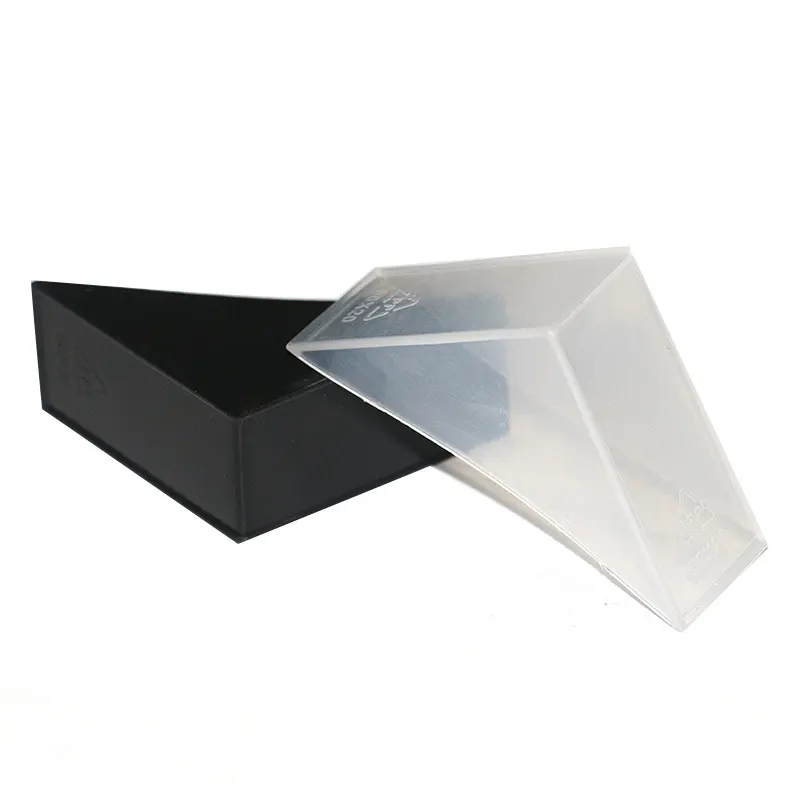
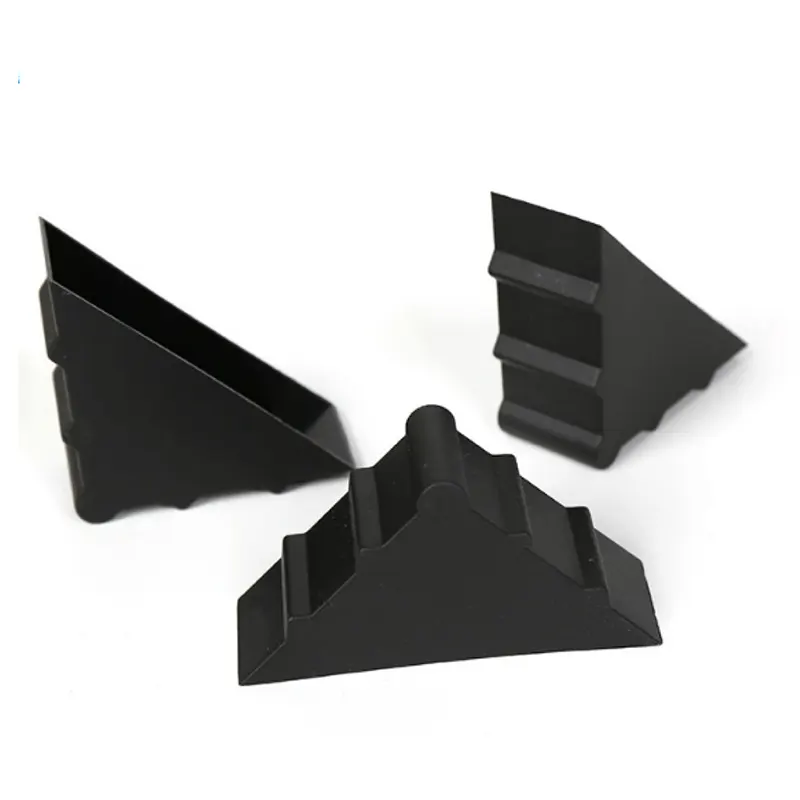
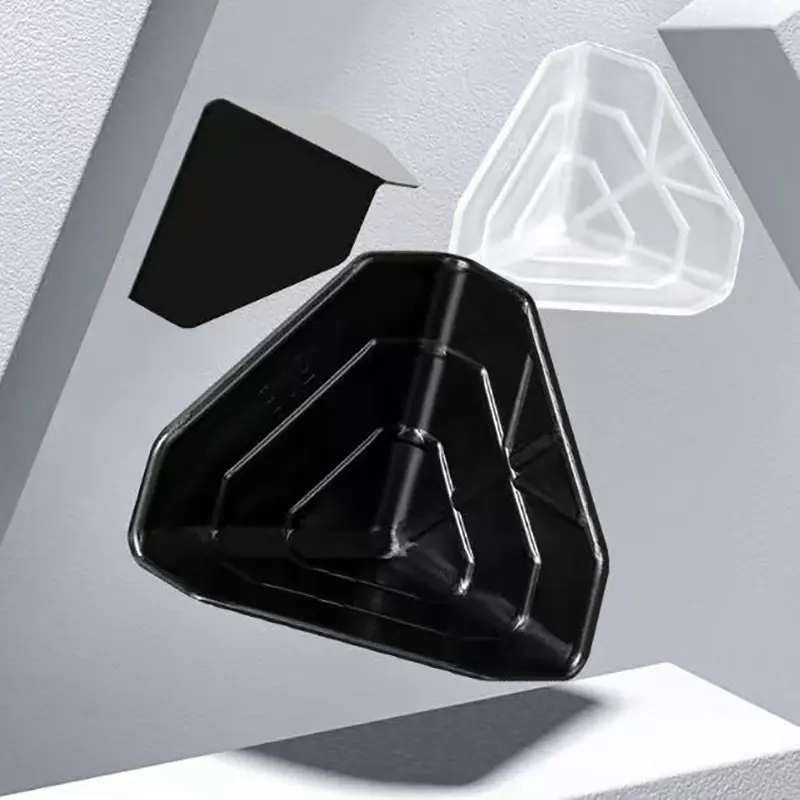
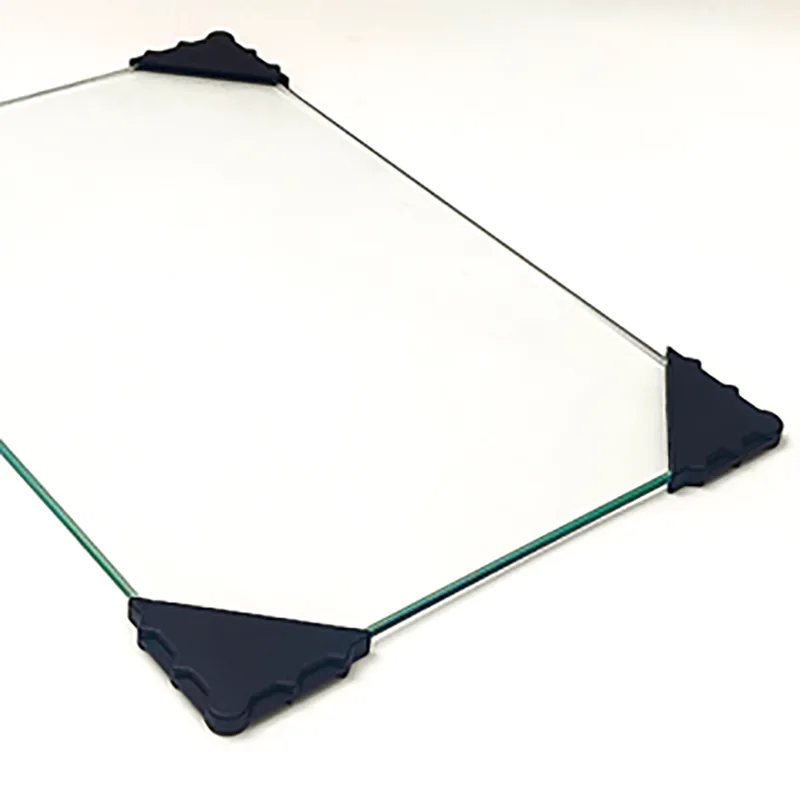
Plastic corner protectors do one unglamorous but essential job: they wrap around the four corners of a glass sheet, turning point impacts into distributed loads.
This is not high technology. But how to choose the right protector, what thickness is actually needed, and which materials won't crack in freezing winter temperatures — these are questions that even people who have been in the glass industry for two decades don't always answer correctly.
A Small Item With a Massive Annual Volume
Billions of plastic corner protectors are used every year. Nobody notices them. But each one costs pennies, and each one protects glass that might be worth hundreds of dollars.
For large glass manufacturers — names like Fuyao, CSG, Saint-Gobain, AGC — corner protectors are not an afterthought. They are written into packaging specifications. They are audited. They are tested.
Good Brilliant International Limited started making these protectors in 2003. More than twenty years later, its customer list includes the global glass giants mentioned above, plus equipment manufacturers like Bystronic and Lisec. Staying in those supply chains for that long means the product is not "good enough for now." It means the product consistently meets standards that跨国 companies enforce across their global operations.
What a Corner Protector Actually Is
Three things matter: stiffness, toughness, and dimensional accuracy.
Material. Most plastic corner guards are made from a blend of PP (polypropylene) and PE (polyethylene). PP provides rigidity and heat resistance. PE provides flexibility and impact strength. Pure PP is brittle — snap it in cold weather. Pure PE is too soft — crush it under weight. The right blend ratio is proprietary know-how. Every manufacturer has its own recipe.
Thickness. Protectors range from 1 mm to 3 mm. Which thickness goes where:
|
Thickness
|
Typical application
|
|
1 – 1.5 mm
|
Small glass sheets, short-distance transport, interlayer between stacked sheets
|
|
1.5 – 2 mm
|
Standard float glass, most normal shipping scenarios
|
|
2 – 3 mm
|
Large-format glass, export, rough road conditions
|
Thicker is not automatically better. An overly thick protector is too rigid — it transmits impact directly instead of absorbing it. Too thin, and it fails before the impact ends. The selection depends on matching the glass weight and shipping method.
Dimensional accuracy. The interior angle of the protector must be exactly 90 degrees. Deviation beyond plus or minus one degree means rejection. Length and width tolerances typically run within plus or minus 1 mm. A loose protector slides off. A tight one won't go on at all. Large glass manufacturers often order custom sizes for each glass specification rather than using one-size-fits-all.
Why Color Is Not Just About Looks
Black and white are the two standard colors.
White protectors dominate export orders and high-end domestic customers. White looks cleaner. Damage and dirt are visible during inspection. If a white protector arrives cracked or dirty, the receiving team notices immediately.
Black protectors are more forgiving. Recycled material can make up a higher percentage without affecting color consistency. The appearance is stable. The cost is lower.
But black does not mean bad quality. For high-volume, cost-sensitive applications, black protectors make economic sense. The key question to ask the supplier: what percentage of virgin material is in that black protector? A good supplier answers directly. A bad supplier dodges the question.
How Major Glass Factories Qualify a Corner Protector
Supplying to Fuyao, Saint-Gobain, or AGC is not a one-time sample approval. Their qualification standards typically include the following.
Dimensional tolerance. Every batch gets checked. Protectors that deviate from the specified dimensions by more than the allowed margin are rejected at the receiving dock.
Drop testing. A glass panel with protectors attached is dropped from a specified height — typically 60 to 100 centimeters — onto a concrete floor. The test checks whether the protector cracks and whether the glass survives. Different customers require different drop heights and cycle counts.
Stacking compression. Simulating warehouse storage or container stacking, a specified weight is applied on top of the protectors. After holding the pressure for a set time, the deformation is measured. Too much deformation means the protector would fail during long-distance shipping.
Low-temperature impact. Glass ships in winter. Trucks cross mountain passes at minus 20 degrees Celsius. Protectors need to stay tough, not turn brittle. This test is mandatory for customers in northern China and for export orders to Russia and Scandinavia.
Smaller manufacturers cannot run all these tests. Large glass companies either demand third-party lab reports or pull samples from incoming shipments for their own testing.
Most Failures Are Not the Protector's Fault
Field observations across multiple glass plants show a consistent pattern: genuine product defects cause only a minority of corner-protector-related failures. The bigger problems happen in how protectors are used.
Wrong placement. The protector must fully cover the glass corner. Some workers, rushing to meet quotas, slide the protector on only halfway. The exposed corner remains vulnerable.
Poor strapping. The protector is in place, but the strapping band is loose. During transit, the protector shifts. When it shifts, it stops protecting.
Reuse without inspection. Protectors can be reused in theory. In practice, picking unbroken, non-deformed protectors out of a scrap pile costs more in labor than buying new ones. Most reused protectors are already damaged before the next shipment.
Wrong thickness for the application. A 1 mm protector trying to protect 30 mm laminated glass is not going to work. The thickness mismatch is too large.
What Export Shipping Adds to the Requirements
Glass exports typically move in shipping containers. A 40-foot container can hold several hundred square meters of glass. Ocean shipping is different from road transport in one crucial way: ships roll. Containers sway. The cargo inside experiences continuous low-frequency vibration and occasional violent shocks.
For export orders, plastic corner protectors need additional qualifications.
First, ROHS certification. This is the baseline for entering the European Union market. No ROHS, no entry.
Second, packaging suitable for container loading. Palletized loads are standard. Protectors go between each layer of glass. Steel strapping secures each pallet.
Third, stable volume capacity. A single export order might require hundreds of thousands of protectors. Small workshops cannot handle that quantity on a reliable schedule.
Good Brilliant has built experience in export logistics through its long-term relationships with multinational glass companies. Those customers enforce the same quality standards across their global factories — what is good enough for a plant in China is good enough for a plant in Brazil or Poland.
When to Switch Suppliers
Purchasing corner protectors creates an illusion: it is just a piece of plastic, so buy the cheapest one.
Then a shipment arrives with cracked glass. The value of the damaged glass exceeds the entire cost of the protectors for that shipment. The savings from cheaper protectors disappear instantly.
A reliable corner protector supplier has several characteristics:
-
Can explain the material blend and virgin material percentage clearly, without vague answers
-
Provides third-party test reports when requested
-
Has a verifiable history of serving large glass manufacturers
-
Responds to quality issues with corrective action, not excuses
For glass manufacturers with high annual output, long transport distances, or significant export volume, setting up an incoming inspection standard for corner protectors makes financial sense. Testing every batch is unnecessary. Testing quarterly to catch material changes before they cause failures is cheap insurance.
Practical Answers to Common Questions
Can corner protectors be recycled?
Yes. PP and PE are thermoplastics. They can be ground and remolded. But recycled material has lower mechanical properties. It gets downgraded to less demanding applications.
Will they work at minus 20 degrees Celsius?
It depends on the formulation. Standard protectors have a brittle temperature around minus 10 to minus 15 degrees Celsius. For northern winters or Russian export orders, a low-temperature formulation is required — achieved by increasing the PE ratio or adding toughening agents.
Can I mix protectors from different suppliers?
Not recommended. Dimensional tolerances and material properties differ. Mixed protectors create uneven load distribution. The packaging specification should list one supplier's model number.
Why not use paper corner protectors?
Paper protectors are more environmentally friendly and cheaper. But they are moisture-sensitive. Humidity inside a shipping container can exceed 80 percent. Paper absorbs moisture, softens, and collapses. The glass industry almost universally uses plastic for ocean shipments.
What is the minimum order quantity?
For standard sizes, several thousand pieces is typical. For custom sizes, a mold is required. Mold costs range from several hundred to a couple thousand US dollars, depending on complexity. The per-unit cost depends on the total order quantity.
 English
  Español
  Português
  русский
  Français
  日本語
日本語  Deutsch
  tiếng Việt
  Italiano
  Nederlands
  ภาษาไทย
  Polski
  한국어
한국어  Svenska
  magyar
  Malay
Malay  বাংলা ভাষার
  Dansk
Dansk  Suomi
Suomi  हिन्दी
  Pilipino
  Türkçe
  Gaeilge
  العربية
  Indonesia
  Norsk
Norsk  تمل
تمل  český
český  ελληνικά
  український
  Javanese
  فارسی
فارسی  தமிழ்
தமிழ்  తెలుగు
  नेपाली
  Burmese
  български
  ລາວ
ລາວ  Latine
  Қазақша
  Euskal
  Azərbaycan
  Slovenský jazyk
  Македонски
  Lietuvos
  Eesti Keel
  Română
  Slovenski
  मराठी
मराठी  Srpski језик